Abstract In metal machining, the performance and cost of cutting tool coatings are critical factors affecting production efficiency and total manufacturing costs. Titanium Nitride (TiN) coatings have long been widely used in drills, end mills, and other cutting tools due to their mature deposition process, low raw material cost, and good comprehensive properties such as […]
Abstract: This paper examines the critical relationship between milling cutter helix angle and chip evacuation efficiency, presenting empirical evidence for the performance advantages of high-helix cutting tools in contemporary metalworking applications. Through analysis of cutting mechanics and practical machining scenarios, we demonstrate how helix angles exceeding 45° fundamentally transform chip flow dynamics, resulting in measurable […]
Introduction Stainless steel is widely used in aerospace, automotive, and precision engineering due to its corrosion resistance, high strength, and durability. However, its inherent properties—such as high toughness, low thermal conductivity, and susceptibility to work hardening—make machining with drills and end mills challenging. Two of the most prevalent issues are work hardening (a permanent increase […]
Titanium alloy Ti-6Al-4V (Grade 5) is a cornerstone material in aerospace, medical, and energy sectors due to its exceptional strength-to-weight ratio and corrosion resistance. However, its machining challenges—low thermal conductivity, high chemical reactivity, and work hardening—demand meticulous optimization of cutting parameters. This article dives into the "golden ratio" of speed, feed, and depth of cut […]
The point angle of a drill is a critical geometric parameter that directly dictates cutting performance, chip formation, tool life, and hole quality in metal machining. Selecting the optimal angle is contingent on workpiece material properties (hardness, ductility, toughness), hole requirements (precision, depth, surface finish), and machining conditions. This article dissects the three most common […]
The pain point Nickel-based super-alloys (Inconel 718, Waspaloy, RR1000, etc.) push carbide drills to their thermal limit. Once the cutting edge exceeds ≈ 900 °C, diffusion wear accelerates and edge chipping follows within seconds. Two commercially stocked PVD coatings—aluminium-chromium-nitride (AlCrN) and titanium-diboride (TiB₂)—both claim “excellent hot hardness”, but their relative value in long-gun drilling is […]
If you're in the business of metal cutting—drilling, milling, turning—you know the coating on your tool isn't just a fancy finish; it's its armor. It’s what stands between a sharp, productive edge and a worn-out, expensive piece of scrap. The two heavyweight champions in this arena are Physical Vapor Deposition (PVD) and Chemical Vapor Deposition (CVD). While both […]
Abstract High-Speed Steel (HSS) has long been a staple material for drills and end mills in metalworking due to its balanced mechanical properties and cost-effectiveness. With the development of powder metallurgy (PM) technology, Powder Metallurgy HSS (PM HSS) has emerged as a high-performance alternative, addressing key limitations of conventional HSS. This article compares the manufacturing […]
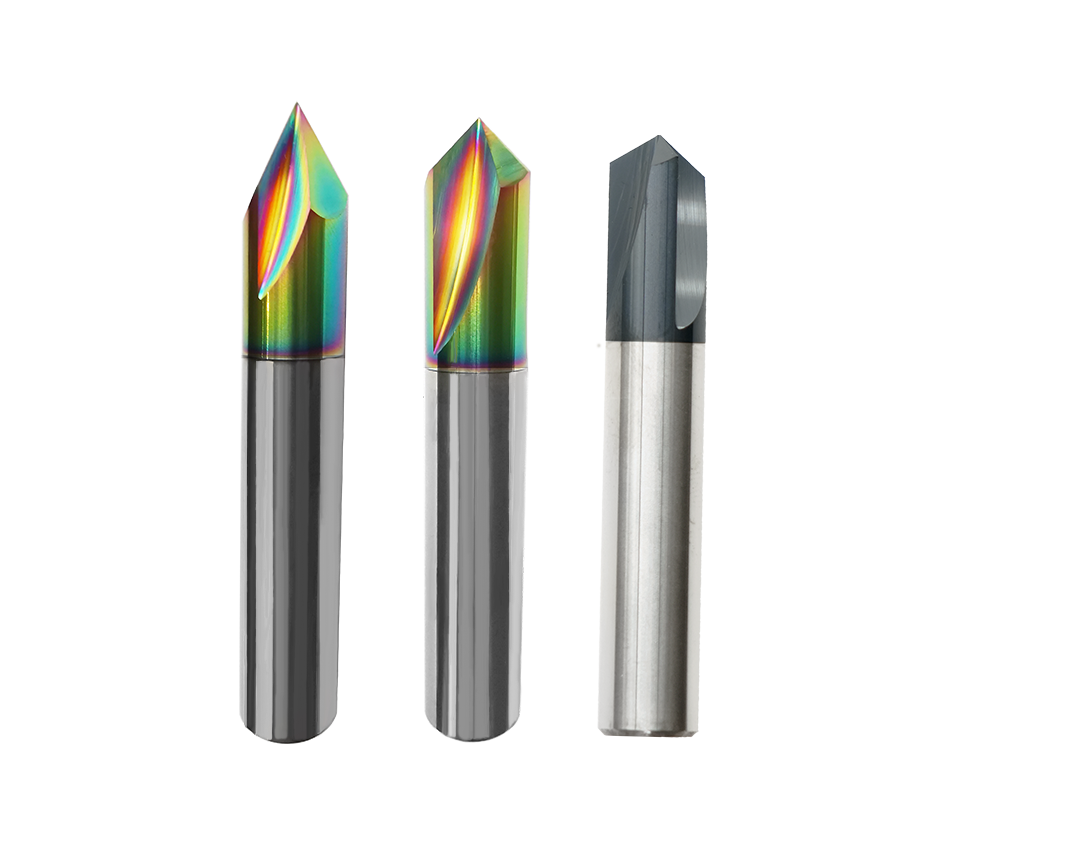
Chamfer end mills are indispensable tools in precision machining, designed to create beveled edges, deburr workpieces, and even perform combined operations like slotting and chamfering simultaneously . Their performance directly impacts machining efficiency, workpiece quality, and tool life. This article systematically elaborates on the core principles, scientific methods, practical skills for selecting chamfer end mills, […]
1. Introduction Milling cutters are core tools in machining, and their performance directly determines processing efficiency, workpiece quality, and production costs. Plastic deformation and rapid flank wear are two common and costly issues in milling operations. These problems not only shorten the service life of the cutter but also lead to poor surface finish of […]