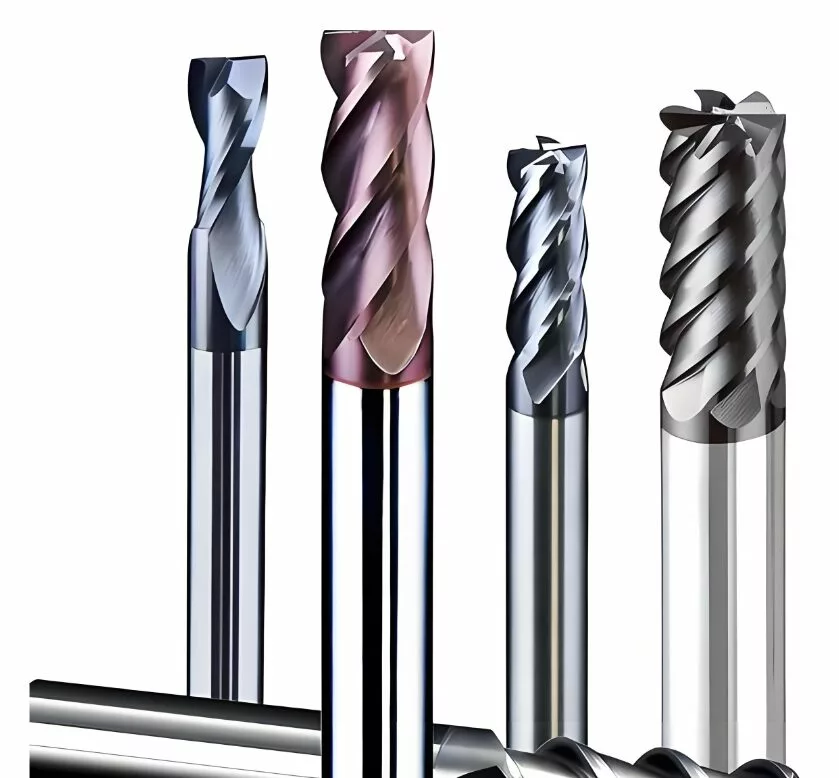
Milling cutters are often referred to as the "teeth of industry." Their manufacturing capability directly determines machining efficiency, cost, and quality in critical sectors such as aerospace, automotive engineering, and precision mold-making. While domestic milling cutter technology has made considerable strides in recent years, the transition from a "large-scale manufacturer" to a "high-quality manufacturing powerhouse" still faces persistent challenges—from fundamental material science to advanced process engineering. Amid these challenges, a number of Chinese enterprises are charting a pragmatic course toward excellence by focusing on niche segments and building sophisticated precision manufacturing capabilities. Changzhou Sumore Tools Co., Ltd. stands as a representative example of this approach.
I. Core Technical Bottlenecks in Milling Cutter Manufacturing
Currently, the barriers to upgrading domestic milling cutters to higher precision and performance levels are concentrated in three main areas:
1. Coating Technology: Patent Walls and Process Complexities
Coatings are the decisive factor in tool life and cutting performance. For years, advanced CVD (Chemical Vapor Deposition) coating technologies have been dominated by a handful of international players, protected by dense patent portfolios. The main technical hurdles for domestic developers include:
-
Precise Multi-element Formulation: Achieving an optimal balance of hardness and thermal stability requires precise incorporation of additional elements (e.g., oxygen, carbon) into the conventional AlTiN base. Mastering the complex "five-element" stoichiometry remains a significant challenge.
-
Microstructural Engineering: Designing nano-scale superlattice architectures to simultaneously optimize hardness, toughness, and adhesion, while managing internal stress to prevent micro-cracking, is a critical bottleneck in practical production.
2. The "Size Effect" in Micro-Machining
The soaring demand for miniaturized components in consumer electronics, medical devices, and other industries has pushed micro-end mills (diameters below 1 mm, and even down to 0.25 mm) to the forefront of manufacturing challenges. Key issues include:
-
Size-Dependent Failure Mechanisms: Wear behavior in micro-tools differs fundamentally from that of conventional cutters. Cutting parameters—particularly feed rate—exert an outsized influence on tool life, and the inherent lack of structural strength makes these tools highly susceptible to chipping.
-
Ultra-Precision Grinding and Inspection: Manufacturing a 0.25 mm diameter end mill pushes the limits of precision grinding centers (e.g., Swiss ROLLOMATIC machines), requiring meticulous compensation for wheel wear and sophisticated in-process gauging systems.
3. The Engineering Gap in Additive Manufacturing
Topology optimization and additive manufacturing (3D printing) open up new design possibilities for internal cooling channels, lightweight structures, and vibration-damping geometries. However, the technology currently faces significant hurdles before widespread industrial adoption:
-
Trade-off Between Precision and Performance: While 3D printing enables complex internal coolant paths (such as curved or rounded channels), the resulting materials often suffer from porosity, internal defects, and compromised damping properties. This frequently leads to increased cutting force fluctuations and, paradoxically, shorter tool life compared to conventionally manufactured counterparts.
-
Post-Processing Difficulties: Finishing the internal surfaces of additively manufactured cooling channels is technically demanding and costly, impeding large-scale industrial deployment.
II. A Case Study in Niche Excellence: Changzhou Sumore Tools Co., Ltd.
In confronting these industry-wide bottlenecks, Changzhou Sumore Tools Co., Ltd. has adopted a focused strategy that emphasizes precision, customization, and niche specialization, rather than attempting to compete across the entire spectrum. This approach has enabled the company to build a distinct competitive advantage in selected market segments.
1. Strategic Focus on High-Precision Custom and Micro-Tools
Founded in 2018 and based in Xixiashu, Changzhou—a renowned hub for the Chinese tooling industry—Sumore is a governing member of the local Tooling Association. The company's core strategy centers on non-standard custom tooling and micro-precision cutting tools. Rather than pursuing high-volume production of standard tools, Sumore has concentrated its resources on technically demanding, higher-value-added niches, offering integrated solutions that encompass design, manufacturing, and after-sales support.
2. Building a "Hardcore" Precision Manufacturing Infrastructure
To overcome the barriers of precision machining, Sumore has invested in internationally recognized, highly automated grinding platforms, creating a complementary production capability:
-
Micro-Tool Manufacturing: The company employs Swiss ROLLOMATIC tool grinding centers, enabling the production of end mills as small as 0.25 mm in diameter and 0.2 mm ball nose radius—a capability that grants entry into the high-barrier field of micro-machining.
-
Large-Tool Manufacturing: Complementing this, German WALTER grinding centers are utilized for efficient, high-precision production of larger-diameter tools, ensuring optimal equipment utilization across the product range.
3. Key Products and Technical Achievements
Sumore demonstrates technical depth in both tool holding systems and high-speed aluminum machining:
-
ASK High-Speed Precision Collet Chucks: These toolholders are balanced to G2.5 at 40,000 RPM, a specification critical for suppressing vibration at high spindle speeds and ensuring superior surface finish quality. This capability reflects the company's expertise in the tooling system as a whole.
-
Aluminum-Specific End Mills: Manufactured from ultra-fine grain carbide substrates and featuring a 40° helix angle with optimized cutting edges, these tools support cutting speeds of 300–800 m/min, and have been demonstrated at nearly 1000 m/min in aerospace aluminum alloy applications. This performance meets the demanding efficiency requirements of industries such as automotive lightweighting.
4. Industry Position and Ecosystem Contribution
Beyond its role as a product manufacturer, Sumore is a vital component of the local industrial cluster. Its micro-drill products have been recognized in global market analyses as representative offerings from a key Chinese supplier. While industry giants like Zhuzhou Cemented Carbide Cutting Tools Co. have broken foreign monopolies in coating technologies (e.g., low-pressure CVD) and Xiamen Golden Egret has demonstrated world-class precision in international competitions, Sumore's strength lies in its agility and specialization. The company excels in rapid response, custom-engineered solutions tailored to specific customer pain points—an essential complement to the broader Chinese tooling industry's capabilities.
III. Concluding Remarks
The advancement of domestic milling cutter technology requires a multi-pronged effort. On one front, flagship enterprises such as Zhuzhou and Xiamen Golden Egret must continue their pioneering work in fundamental materials, advanced coatings, and competing on the global stage. On another, companies like Changzhou Sumore illustrate the power of niche focus—achieving excellence through meticulous attention to process details and flexible, customer-centric customization in micro-tools and non-standard solutions. Ultimately, the next leap forward for China's tooling industry will depend on closing the loop across the entire technology chain: from coating materials and precision grinding to the industrial maturation of additive manufacturing. The path forged by Sumore and its peers offers a grounded, practical model for indigenous innovation—one that is both locally rooted and globally relevant.